Nullam dignissim, ante scelerisque the is euismod fermentum odio sem semper the is erat, a feugiat leo urna eget eros. Duis Aenean a imperdiet risus.

Industry Cases

case

Field Case Study: J60/79/76/38-40MF Pick

43.4 m Advance | 12 Picks Consumed | Competitor: 57 Picks Consumed New Pick After Field Use 1.Working Conditions & Key Data Item Data Mine Type Inclined shaft Pick Model J60/79/76/38-40MF Machine Model XCMG EBZ280 Installed Quantity 48 pcs Geology Rock formation + fractured zone, limestone hardness f=11 Cutting Motor 280 kW Rotation Speed 54 r/min Cooling Type Water cooling Trial Setup 15 picks were installed in the high-wear zone and compared with 57 competitor picks Test Period Apr 26, 2026 — May 4, 2026   2.Field Performance The trial delivered a total advance of 43.4 m under demanding rock-cutting conditions. Our picks consumed 12 pcs in total, while competitor picks consumed 57 pcs. Based on on-site consumption, our pick usage was only about 21% of the competitor level, representing roughly 79% lower consumption. Pick consumption per meter of advance was about 0.28 pcs/m for our picks, versus about 1.31 pcs/m for competitor picks. Even in the high-wear zone, the picks showed better wear resistance and stronger suitability for continuous operation. 3.Product Advantages Strong wear resistance: Performs reliably in f=11 limestone and fractured rock conditions. Better performance in high-wear zones: Helps reduce replacement frequency in the most demanding positions. Less downtime: Fewer pick changes help increase effective roadheader operating time. Lower cost per meter: Reduced pick consumption leads to better overall operating economy. Good field compatibility: Easy to use with existing equipment and mixed on-site operating conditions. 4.Summary Under XCMG EBZ280 operation with a 280 kW cutting motor, 54 r/min speed, and water cooling, the J60/79/76/38-40MF pick completed 43.4 m of advance in f=11 limestone and fractured formations. Our picks consumed 12 pcs versus 57 pcs for the competitor, demonstrating lower consumption, stronger wear resistance, and better cost efficiency per meter in high-wear tunneling applications.
case

Field Case Study: Diamond Coal Mining Pick

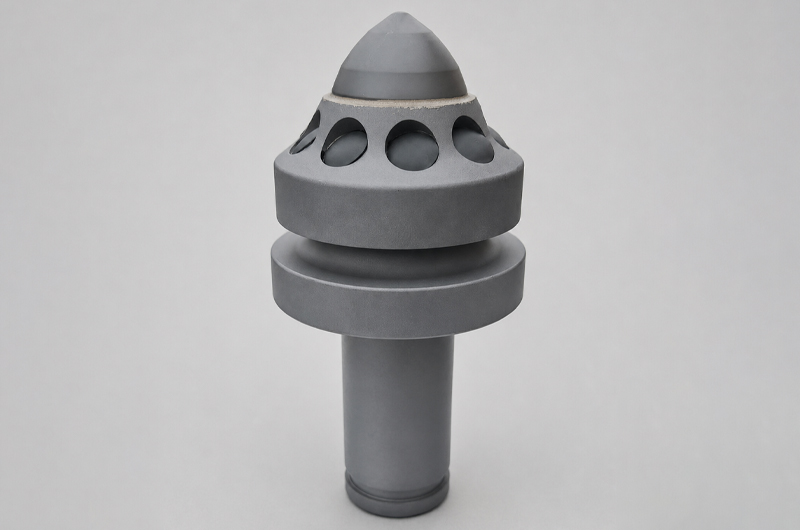
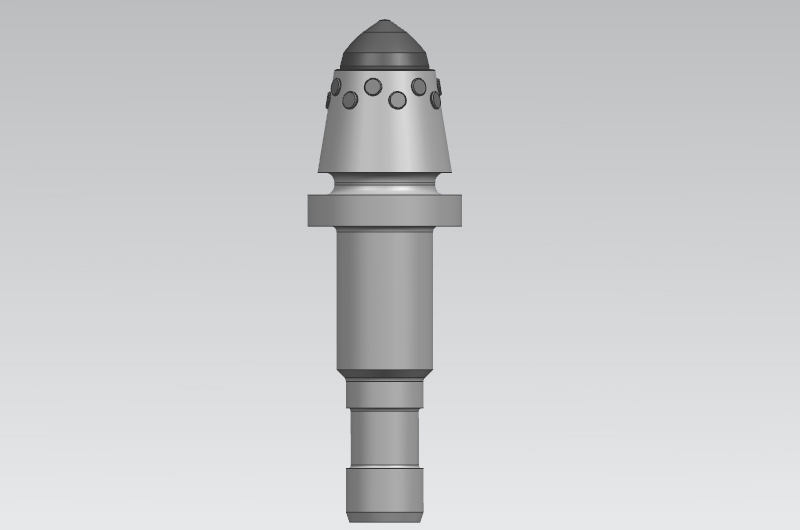
8–10× Longer Service Life | Nearly 30% Cost Savings | 20% Higher Cutting Efficiency Structure Reference: J70/69/132/35-40MF diamond pick design reference After Field Use: On-site working condition on a coal shearer in mixed coal, mudstone, and sandstone formations 1.Working Conditions & Key Data Mine type Vertical shaft Pick model J70/69/132/35-40MF Equipment MG900/2360-WD Cooling method Water cooling Installed quantity 108 picks on front & rear drums Cutting motor Dual cutting 2 × 900 kW Drum / face 48 picks on drum; 6 on end face Rotation speed 25 r/min Formation Coal seam f=3–4; mudstone f=4–5 Sandstone hardness Medium-grained sandstone f=5–8 Trial result 139.6 m face advance in 3 months Consumption 32 diamond picks consumed 2.Field Performance Longer service life: The diamond coal picks delivered approximately 8–10 times the service life of conventional carbide picks. Lower operating cost: Field trials indicated nearly 30% overall cost savings. Higher cutting efficiency: Under the same geological conditions, cutting efficiency improved by about 20%. Continuous operation: From Dec. 11, 2019 to Mar. 10, 2020, the working face advanced 139.6 m while consuming 32 diamond picks. More stable machine operation: The shearer ran more smoothly with lower vibration, helping improve operational safety. 3.Product Advantages Diamond wear-resistant cutting tip: Built for coal seams, mudstone, and medium-grained sandstone mixed formations. Stable cutting in harder interlayers: Maintains reliable cutting performance in f=5–8 sandstone containing quartz and calcareous cementation. Reduced replacement frequency: Longer pick life helps reduce downtime caused by frequent pick changes. Lower abnormal wear risk: Regularly checking free rotation helps avoid eccentric wear caused by hardened coal ash and debris in the pick holder. 4.Summary Under MG900/2360-WD shearer operation, dual 2×900 kW cutting motors, and water cooling, the J70/69/132/35-40MF diamond pick demonstrated strong durability, cost efficiency, and cutting stability in coal, mudstone, and medium-grained sandstone formations. Compared with traditional carbide picks, it achieved about 8–10× longer service life, nearly 30% cost savings, and around 20% higher cutting efficiency, making it a reliable choice for improving shearer productivity and operational safety.
case

Field Case Study: 120 Flat-Top Four-Wing Drill Bit

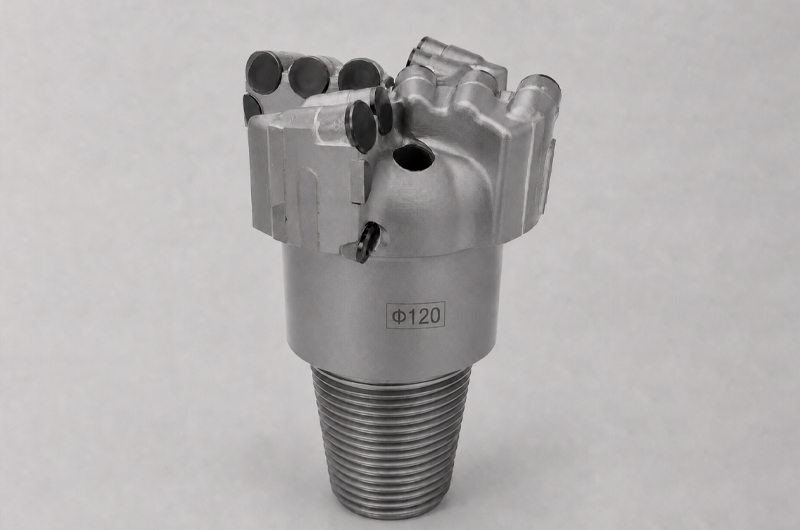
Average service life of 750 m/bit in f=6-10 roof sandstone mixed with coal gangue and mudstone This case comes from a vertical-shaft high-level roof borehole project. The 120 flat-top four-wing drill bit was used in roof sandstone mixed with coal gangue and mudstone on a VLD-1000 directional kilometer drilling rig, completing 7,500 m of total drilling with an average service life of 750 m per bit. Working Conditions Mine type Vertical shaft Application Coal seam roof high-level borehole / directional long-hole drilling Bit model 120 flat-top four-wing drill bit Equipment VLD-1000 directional kilometer drilling rig Cooling method Water cooling Formation and Drilling Parameters Geological condition Roof sandstone mixed with coal gangue and mudstone Rock hardness f=6-10 Thrust force 90 kN Rotation speed 180 r/min Total drilling length 7,500 m Average bit life 750 m/bit Performance After Field Use Long service life: The bit achieved an average life of 750 m/bit in f=6-10 mixed formations, supporting long-distance continuous drilling. Stable structural integrity: After field use, the bit body, four-wing profile, and threaded connection area remained stable and reliable. Firmly bonded PDC cutters: The PDC cutters remained tightly bonded to the bit body, with no obvious loosening, detachment, or delamination. Outstanding wear and impact resistance: In alternating sandstone, coal gangue, and mudstone conditions, cutting-area wear remained controlled and predictable. Efficient cuttings removal: The flat-top four-wing structure supports efficient rock breaking and stable cuttings discharge, reducing the risk of sticking or bit balling. Solves a key field challenge: It helps improve drilling efficiency and service life in coal seam roof high-level borehole operations. Image Captions Before Use After Field Use Unused 120 flat-top four-wing drill bit, showing the complete cutting structure, PDC cutter layout, cuttings channels, and threaded connection area. Our product after drilling in f=6-10 roof sandstone mixed with coal gangue and mudstone, showing firmly bonded PDC cutters, stable bit body, and controlled wear for long-hole drilling. Key Advantages Extended wear life: Average service life of 750 m/bit for underground roof borehole and directional long-hole drilling. PDC cutter advantage: High-hardness PDC cutters offer strong wear resistance and remain firmly bonded to the bit body, reducing cutter-loss and abnormal failure risks. High-efficiency rock breaking: The four-wing flat-top design provides stable cutting coverage and balanced bottom-hole loading. Wide formation adaptability: Suitable for roof sandstone, coal gangue, mudstone, and f=6-10 medium-hard to hard mixed formations. Reliable drilling continuity: Stable water-cooled performance helps reduce bit replacement frequency and downtime. Summary In f=6-10 roof sandstone mixed with coal gangue and mudstone, our 120 flat-top four-wing drill bit completed 7,500 m of total drilling with an average service life of 750 m/bit, demonstrating high-efficiency drilling, extended wear life, and firmly bonded PDC cutter performance.

case

Field Case Study: φ113 Three-Wing Drag Bit

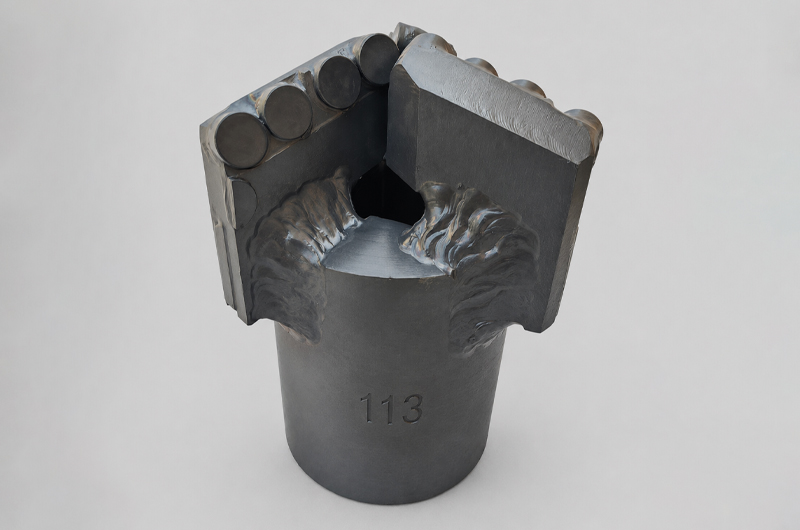
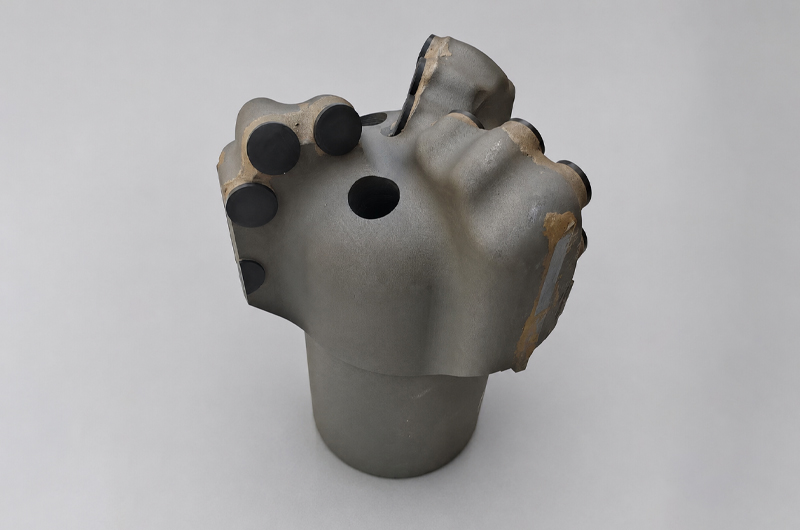
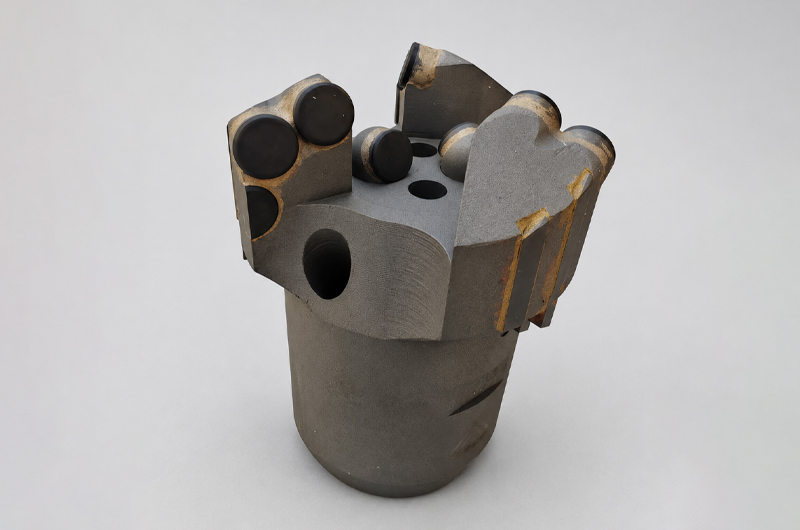
Stable structure after 400 m drilling in f=9 shale inclined-shaft conditions Working Conditions Mine type Inclined shaft Application Underground drilling for gas drainage, water exploration, grouting and related boreholes Bit model φ113 three-wing drag bit Equipment ZDY3200 Cooling method Water cooling Formation and Drilling Parameters Geological condition Coal-seam application; shale; hardness f=9 Thrust force 12 kN Rotation speed 80 r/min Total drilling footage 400 m per bit Product positioning An efficient and economical bit for soft to medium-hard formations, including coal seams, mudstone and soft sandstone roadways Performance After Field Use After 400 m of accumuslated drilling, the bit maintained good overall structural integrity with no obvious structural failure. The three-wing cutting profile remained clear, with wear mainly concentrated in the normal working contact area. The flushing and chip-removal space remained identifiable, supporting fast slag discharge and reduced bit balling risk. Under f=9 shale conditions, the bit demonstrated stable wear resistance, impact resistance and continuous drilling capability. After field use, the PDC cutters remained firmly bonded to the bit body, with no obvious loosening or detachment, demonstrating stable and reliable bonding strength. PDC Cutter Advantages Firm bonding between the PDC cutters and the bit body helps reduce cutter-loss risk under high-load drilling. Stable cutter arrangement helps maintain continuous cutting efficiency and drilling stability. Controlled cutter-edge wear after field use reflects reliable material matching and bonding/welding process control. Multiple PDC cutters work together to support efficient drilling in coal seams, mudstone, shale and soft sandstone formations. Image Captions Before Use After Field Use Unused φ113 three-wing drag bit, showing the original three-wing cutting structure, PDC cutter arrangement and central discharge space. Our product after 400 m drilling in f=9 shale inclined-shaft conditions, showing stable structure, firm cutter bonding and controlled wear around the cutting area. Key Advantages High drilling efficiency: Suitable for common underground formations such as coal seams, mudstone, shale and soft sandstone. Good slag discharge: The central structure supports chip removal and helps reduce bit balling. Wear and impact resistance: Built for continuous drilling under demanding underground conditions. Reliable PDC cutter bonding: No obvious loosening or detachment after field use; cutting units remained stable. Lower overall operating cost: Helps reduce bit replacement frequency and improve on-site drilling continuity. Summary In f=9 shale inclined-shaft conditions, our φ113 three-wing drag bit achieved 400 m of accumulated drilling while maintaining good structural integrity, stable cutting performance and reliable PDC cutter bonding strength.
case

Field Case Study: φ113 Three-Wing Arc-Angle Bit

568 m stable drilling in f=9 limestone with minor quartz and slight fractures Hard-rock drilling performance | Firm PDC cutter bonding | Controlled wear after field use Image Comparison Before Use Before Use – Detail View After Field Use New bit structure and cutter layout Clear PDC cutter and arc-angle wing profile Our product after 568 m drilling in inclined-shaft limestone conditions, showing structural integrity, firmly bonded PDC cutters, and controlled wear. 1. Working Conditions Mine type Inclined shaft Application Rock drilling operation Bit model φ113 three-wing arc-angle bit Equipment ZDY4000 Cooling method Water cooling   2. Formation & Drilling Parameters Formation type Mainly limestone, with minor quartz and slight fractures Rock hardness f=9 Thrust force 130 kN Rotation speed 180 r/min Total footage 568 m Operating period 6 days, with an average daily footage of 94 m   3. Performance After Field Use High footage performance: The bit achieved 568 m of accumulated drilling with stable operation over 6 continuous days. Stable structural retention: The bit body, three-wing profile, and arc-angle cutting structure remained intact after field use. Firm PDC cutter bonding: The PDC cutters remained tightly bonded to the bit body, with no obvious loosening, detachment, or delamination. Reliable wear resistance: Under f=9 limestone with minor quartz content, the cutting area showed controlled wear and stable edge support. Strong impact resistance: The bit withstood continuous load, impact, and slight fractured-rock conditions without obvious structural failure. Smooth drilling and cuttings removal: The three-wing arc-angle design helps improve drilling stability and reduce the risk of abnormal wear or jamming. 4. Key Advantages Durable hard-rock performance: Suitable for limestone, quartz-bearing formations, and slightly fractured rock. Wear-resistant cutting structure: Optimized PDC cutter layout and wing support help extend service life in long-distance drilling. Impact-resistant design: The arc-angle profile helps absorb localized impact and improves adaptability in complex formations. Stable cutter bonding: A reliable bonding interface helps reduce the risk of cutter loosening and detachment. Efficient and consistent drilling: Supports higher drilling continuity and reduces downtime caused by frequent bit replacement.
case

Field Case Study: φ94 Three-Wing Concave Stepped-Wing Bit

650 m per bit in limestone (f=8) drilling conditions 1.Working Conditions Mine type Vertical shaft Bit model φ94 three-wing concave stepped-wing bit Equipment ZDY2800 Application Underground drilling for water detection, gas drainage, grouting, and similar boreholes Cooling method Water cooling   2.Formation & Drilling Parameters Formation Rock formation (limestone, f=8) Thrust force 12 kN Rotation speed 80 r/min Total footage 650 m per bit Design feature Three-wing concave design with stepped wings for stable guidance, smooth cuttings removal, and strong adaptability   3.Performance After Field Use After 650 m of accumulated drilling, the bit body remained structurally intact and the stepped-wing profile stayed clearly recognizable. The PDC cutters remained firmly bonded, with high cutter retention and no abnormal chipping or detachment observed. Wear on the main cutting area and gauge area was concentrated in the normal contact zones, showing controlled and even wear. In limestone and alternating hard-soft roadway conditions, the bit delivered stable guidance, low deviation tendency, and strong impact and wear resistance. Well suited for medium-hard rock, interbedded formations, and general underground drilling such as water detection, gas drainage, and grouting holes. 4.Image Comparison New bit Bit after field use 5.Key Advantages High footage performance: Achieved 650 m per bit in limestone (f=8), helping reduce bit changes and improve drilling continuity. Stable guidance: The concave profile combined with stepped wings helps improve hole stability and reduce deviation. Reliable cutter bonding: Firmly bonded PDC cutters provide strong impact resistance and reduce the risk of cutter loss. Long wear life: Even wear distribution supports reliable service life in medium-hard and abrasive formations. Broad applicability: Suitable for water detection, gas drainage, grouting, and other underground drilling applications. 6. Summary Summary: This φ94 three-wing concave stepped-wing bit achieved 650 m per bit in limestone (f=8) conditions, combining stable guidance, wear and impact resistance, and reliable cutter bonding—an efficient solution for medium-hard rock and complex roadway drilling.
Products
Contacts
WhatsApp
Email