Nullam dignissim, ante scelerisque the is euismod fermentum odio sem semper the is erat, a feugiat leo urna eget eros. Duis Aenean a imperdiet risus.

Industry Cases

case

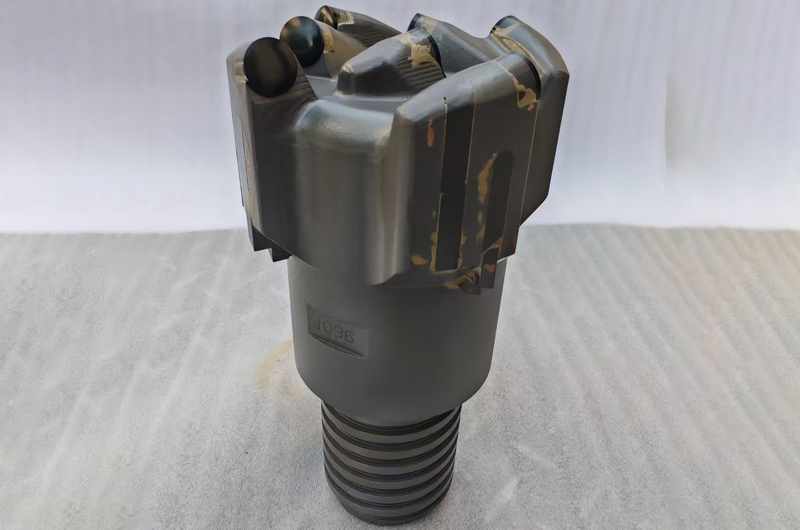
Field Case Study: φ94 Three-Wing Concave Bit

300 m per bit in f=8 aluminous mudstone inclined-shaft conditions Section 1: Working Conditions Mine type Inclined shaft Application Underground drilling in coal mine roadways Bit model φ94 three-wing concave bit Equipment ZDY-2300 Cooling method Water cooling Section 2: Rock Formation & Drilling Parameters Formation type Aluminous mudstone Rock hardness f=8 Thrust force 12 kN Rotation speed 80 r/min Total drilling distance 300 m per bit Design feature Central concave design for anti-balling and fast cuttings discharge Section 3: Performance After Field Use After 300 m of accumulated drilling per bit, the main body remained intact and the three-wing profile stayed clear. Wear on the cutting teeth and wing support areas was concentrated in the normal working contact zones, showing controlled wear. The central concave design helped reduce bit balling and improve cuttings discharge. In f=8 aluminous mudstone inclined-shaft conditions, the bit delivered stable drilling with reliable wear and impact resistance. Suitable for underground drilling in mudstone, coal seams, soft sandstone roadways, and similar formations. The PDC cutters are tightly bonded to the bit body, with a stable and reliable bonding interface. Section 4: Image Captions Before Use After Field Use Unused φ94 three-wing concave bit, showing the original three-wing structure, central concave design, and cutting tooth layout. Our product after 300 m per bit in f=8 aluminous mudstone inclined-shaft conditions, showing intact structure and controlled wear. Section 5: Key Advantages Fast cuttings discharge: The central concave design helps reduce bit balling and improve flushing efficiency. Wear and impact resistance: Stable structure after long-distance drilling in abrasive aluminous mudstone. Stable drilling performance: The three-wing structure improves support stability and helps reduce failure risk. Broad formation adaptability: Suitable for mudstone, coal seams, soft sandstone roadways, and general underground drilling. Higher operational continuity: Helps reduce downtime caused by bit balling and frequent bit replacement. Section 6: Summary In f=8 aluminous mudstone inclined-shaft conditions, our φ94 three-wing concave bit achieved 300 m per bit with stable drilling, fast cuttings discharge, wear and impact resistance, and low failure risk.
case

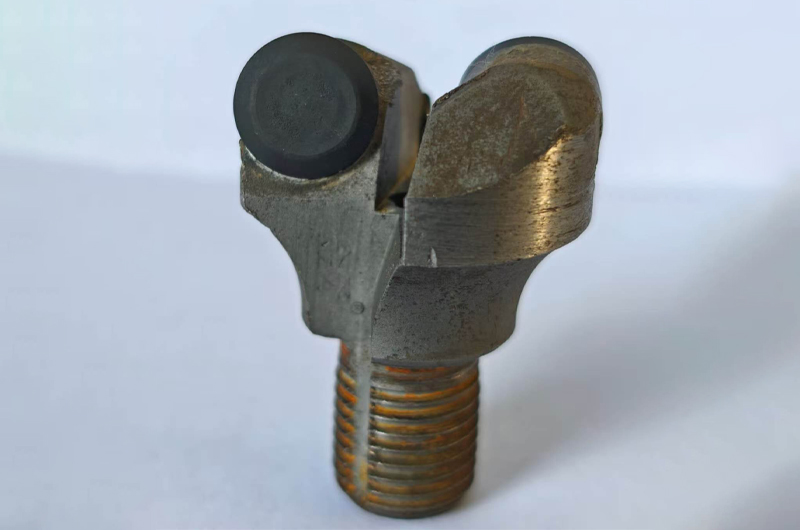
Field Case Study: φ32 Two-wing PDC Anchor Bit

Stable performance after 38 meters of drilling in fractured limestone with hard quartz interlayers Case Summary Application: roof bolt and cable anchor hole drilling in a vertical mine shaft Rock condition: fractured limestone with local hard quartz interlayers, hardness f=9 Result: 38 m total drilling footage with stable bit structure and controlled wear 1. Working Conditions & Drilling Parameters Item Details Item Details Mine type Vertical shaft Bit model φ32 two-wing PDC anchor bit Equipment MQT-130 Cooling method Water cooling Rock type Limestone Rock condition Fractured, with local hard quartz interlayers Rock hardness f=9 Drilling pressure 0.6 MPa Rotation speed 180 r/min Total footage 38 m Completed holes 4 × 6.2 m cable anchor holes Completed holes 11 × 1.2 m anchor holes 2. Before & After Field Use Before Use After Field Use Before use: unused φ32 two-wing PDC anchor bit, showing the original cutting structure and wing profile. After field use: our product after 38m drilling in f=9 fractured limestone with hard quartz interlayers. The bit shows stable structure, controlled wear, and no obvious large-area structural failure. 3. Key Field Performance Structure remained stable: After completing 38 m of drilling, the bit body and wing profile maintained good overall integrity. Controlled wear in hard rock: The cutting support area and gauge area showed manageable wear under limestone and hard quartz interlayer conditions. Good resistance to chipping: No obvious large-area breakage or structural failure was observed after use in fractured rock. Reliable drilling continuity: The bit completed both cable anchor holes and anchor holes, helping support continuous on-site drilling operations. Suitable for demanding roof support work: The result demonstrates strong adaptability in fractured limestone and high-hardness interlayer applications. Conclusion In an f=9 fractured limestone formation with hard quartz interlayers, our φ32 two-wing PDC anchor bit delivered 38 m of stable drilling performance while maintaining strong structural integrity and controlled wear after field use.
case

Field Case Study: Full-Blade Roof Bolt Bits

Stable structure after 56 m drilling in f=10 limestone inclined-shaft conditions Working Conditions Mine type Inclined shaft Application Anchor cable holes and anchor bolt holes Bit model φ32 two-wing PDC anchor bit, full-piece type Equipment MYT-140 Cooling method Water cooling Rock Formation & Drilling Parameters Formation type Limestone Rock hardness f=10 Thrust force 9 kN Rotation speed 240 r/min Total footage 56 m Completed holes 6 anchor cable holes × 6.2 m; 13 anchor bolt holes × 1.4 m Performance After Field Use After 56 m of accumulated drilling, the bit maintained good overall structural integrity. The two-wing profile remained clear, with no obvious structural fracture. The PDC cutting area showed stable wear performance, with wear concentrated in the normal working contact zone. The wing support area remained in good condition, indicating reliable wear resistance. The threaded connection area stayed intact after continuous drilling. Under f=10 limestone hard-rock conditions, the product demonstrated strong durability and field reliability. Image Captions Before Use Unused φ32 two-wing PDC anchor bit, showing the original cutting structure, wing profile, and threaded connection area. After Field Use Our product after 56 m drilling in f=10 limestone inclined-shaft conditions, showing stable structure and controlled wear. Key Advantages Strong hard-rock adaptability: Suitable for f=10 limestone and other high-hardness formations. Stable wear resistance: Controlled wear after long-distance drilling. Good structural retention: Wing profile, support area, and thread section remained intact. Reliable impact resistance: Designed for continuous drilling under demanding inclined-shaft conditions. Improved drilling continuity: Helps reduce bit replacement frequency and improve on-site efficiency.
case

Field Case Study: 98 Flat-Top Drill Bit

Average service life of around 880 m in f=3-11 mixed formations; over 1,800 m life in coal seam drilling Used with ZDY1250 equipment in inclined-shaft drilling, the bit is designed for coal seams, gangue, limestone, and variable mixed strata requiring stable footage, cutter retention, and reliable wear resistance. Before Us After Field Us Unused bit: complete flat-top cutting layout, PDC cutter arrangement, and flushing/cuttings channels. After field use: the body and cutting structure remain stable; PDC cutters stay firmly bonded with controlled wear. Working Conditions & Drilling Parameters Mine type Inclined shaft Bit model 98 flat-top matrix bit Equipment ZDY1250 Cooling method Water cooling Formation Coal seam, gangue, limestone, hard nodules Hardness f=3-11 Thrust force 40 kN Rotation speed 120 r/min Coal seam life Over 1,800 m Average bit life Approx. 880 m Performance After Field Use  Fast drilling in coal seams, with bit life generally above 1,800 m.  Average service life reaches around 880 m across complex mixed formations.  The flat-top matrix body maintains stable support under changing strata and fractured conditions.  PDC cutters remain firmly bonded to the bit body, with no obvious loosening or detachment. Controlled wear after use supports continuous drilling and predictable replacement planning. Core Advantages  Wide formation adaptability: suitable for coal seams, gangue, limestone, and f=3-11 mixed strata.  High-strength matrix design improves wear resistance and impact resistance in variable rock layers.  Reliable PDC cutter bonding reduces cutter-loss risk and abnormal failure during drilling.  Flat-top structure supports stable cutting coverage and smoother cuttings discharge. Helps reduce bit replacement frequency and improve overall drilling continuity on site. Summary In f=3-11 mixed formations including coal seam, gangue, limestone, and hard nodules, the 98 flat-top matrix drill bit demonstrates strong formation adaptability, stable wear resistance, and reliable PDC cutter bonding. With a typical average life of around 880 m and coal seam drilling life generally above 1,800 m, it is a practical solution for improving drilling continuity and reducing unplanned bit changes in underground borehole operations.

6.Delivery & Support copy 2

Delivery & Support

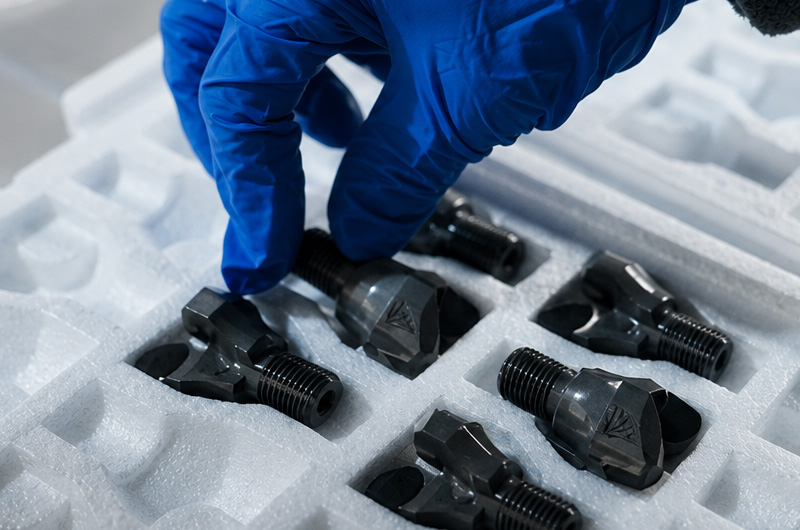
Protective packaging, international logistics support, application guidance, field feedback analysis, and after-sales technical assistance.
5.Quality Inspection

Quality Inspection

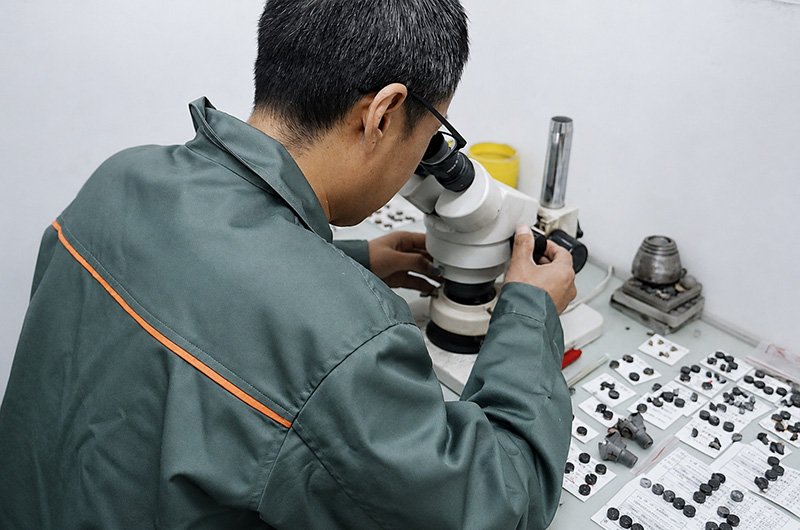
Each product undergoes material verification, dimensional inspection, brazing quality assessment, structural consistency checks, and performance-oriented quality control.
Products
Contacts
WhatsApp
Email